

An overview of the basics of polishing and the process step by step
As with any other specialized technique, polishing is a multi-step process that requires the use of adequate tools and equipment to achieve high quality results. To help you get started, here’s a brief overview of the polishing process and a checklist of basic equipment and supply needs, along with some buying tips.
Note that each job will present different conditions and challenges, so be sure to consult your equipment and materials suppliers for recommendations on the most suitable products for your application.
Fundamentals of polishing
Polishing concrete is very similar to polishing wood . Machines equipped with abrasives with diamond particles (similar to sandpaper) are used to sand concrete surfaces to the desired degree of sheen and smoothness.
As when sanding wood, you gradually switch from coarser to finer grit abrasives. (In this case, the grain is the particle size of the diamond.) The result is a glossy, mirror-like finish.
You can polish concrete using wet or dry methods. While each has its own advantages, dry polishing is the most commonly used method in the industry today because it is faster, more convenient and environmentally friendly.
polishing wet uses water to cool diamond abrasives and remove grinding dust. Since water reduces friction and acts as a lubricant, it increases the life of the polishing abrasives. The main disadvantage of this method is cleaning. Wet polishing creates a huge amount of slurry that teams have to collect and dispose of in an environmentally friendly way. With dry polishing, no water is required. Instead, the floor polisher is connected to a dust containment system that sucks up virtually any mess.
Summary of the basic polishing steps
- Remove existing coatings (for thick coatings, use a 16- or 20-grit diamond abrasive or a more aggressive tool specific for coating removal, such as a T-RexTM) Seal cracks and joints with an epoxy putty or other semi-rigid.
- Grind with a 30 or 40 grit metal bonded diamond.
- Grind with an 80-grit metal-bonded diamond.
- Grind with a 150-grit metal bond diamond (or finer if desired).
- Apply a chemical hardener to thicken the concrete.
- Polish with a 100 or 200 grit resin bonded diamond or a combination of the two.
- Polish with a 400 grit resin bonded diamond.
- Polish with an 800-grit resin bonded diamond.
- Finish with a 1500 or 3000 grit resin bonded diamond (depending on the desired gloss level).
- Optional: Apply a stain protector to protect the shiny surface and facilitate maintenance.
Do-it-yourself polished concrete floor
Polishing concrete is not an easy DIY project </ strong>, as it requires heavy equipment and special diamond tools.
We recommend hiring a professional concrete polishing contractor to complete your project. They will have a thorough understanding of what it takes to get the best results.
While concrete polisher rentals are available at local supply stores, the learning curve is steep. Additionally, there are many safety precautions that need to be taken during the process, particularly with regards to dust collection.
Concrete floor: costs and prices per square meter
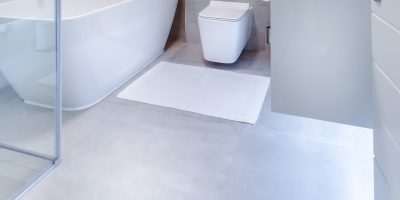
Concrete or screed floors can be an interesting and attractive alternative to conventional floor coverings. Perhaps you have thought of asking for a quote to…
A general view on concrete floor types
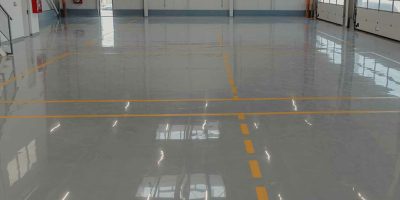
One of the many advantages of the concrete floor is that it is very versatile. If you’re still in the planning stages of your project,…
Differences between polished concrete and other types of flooring
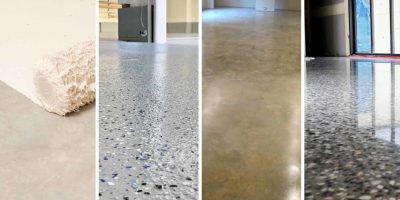
Basic polished concrete is often less expensive the installation of other flooring options. In addition to being cheaper to install in the beginning, there is…